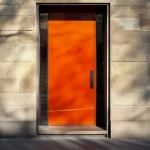


There is a color you keep choosing.
You may not have named it yet. But it is in the room you loved most as a child, the sweater you reach for without thinking, the images that stop your scroll before your brain has caught up with your eye. It is the color of the mug you bought because something made you pick it up. The throw pillow you justified with practicality, but chose for something else entirely. The paint chip you saved months ago and haven’t thrown away.
You are not choosing this color. It is choosing you. And it has been trying to tell you something for years.
The Pattern You’ve Been Ignoring
Most people think of color preferences as aesthetic; a matter of taste, of what goes with what, of what’s supposed to work in north-facing rooms versus south-facing ones. That framing is useful for shopping. It is almost entirely useless for understanding yourself.
Your recurring color is not a style preference. It is a signal. And like most signals we send ourselves, we’ve learned to explain it away before we have to take it seriously.
Think about the last time you stood in front of two options. Two versions of the same thing, one in a safe, sensible color and one in the color. And felt the pull toward the second one, then talked yourself out of it. You called it impractical. Too bold. Too much for right now, as if there were a later time that would be more appropriate for being fully yourself.
That hesitation is worth examining. What you dismissed in that moment was not a whim. It was information.
What the Color Is Carrying
Every color we are drawn to repeatedly is holding something for us. Memory. Aspiration. An identity we’ve claimed or one we’re still reaching toward. Sometimes all three at once.
This is not mysticism. It is the way human memory is encoded. Colors are absorbed long before language is, which means they carry meanings that predate our ability to explain them. The gold that makes you feel something before you know what you feel may be your grandmother’s kitchen light. The green that unsettles you may be the waiting room you sat in during the hardest year of your life. The blue that makes you exhale may be a coastline you stood on once and decided something important.
We do not choose our resonances. They accumulate. And they leave traces in what we reach for.
The color you keep coming back to is not random. It is the sum of what you’ve experienced, layered over what you want to feel, pressed against what you believe you deserve. That last part is where it gets honest.
What You Believe You Deserve
Here is the question the color is really asking: Do you believe you are allowed to have what you actually want?
Not as a philosophical exercise. As a practical one. Look at your home. Look at your wardrobe. Look at the surfaces of your daily life. How much of what you’ve chosen is what you wanted, and how much is what felt safe to want?
For many people, there is a color they love and a color they live with, and they are not the same. The loved color got filed under “someday,” or “maybe for a different space,” or “that’s not very practical.” The lived color is fine. Neutral. It goes with everything. It bothers no one. It says nothing.
Your space, in this arrangement, is not telling the truth about who you are. It is telling the truth about who you’ve decided it’s acceptable to be.
The color you keep coming back to is the uncensored version. The one that hasn’t been run through the filter of what other people might think, or what resale value requires, or what your idea of yourself as a responsible adult dictates. It is you before the editing.
How to Read It
So what does it mean?
The first step is to identify it honestly. Not the color you think you should love, not the one that fits the aesthetic you’ve been building. The one that keeps showing up in what you save, what you reach for, what you notice before you decide to notice it.
Write it down. Name it specifically, not generally. Not “blue” but the particular blue. The one that’s almost gray in certain light, that reads like water at dusk. Not “green” but the particular green. The one that’s more sage than moss, more faded than bright, that makes you think of old linen. The more specific you can be, the more honest the reading.
Then ask: where else does this color live in my life?
In the things you’ve kept. In the choices you’ve made when no one was watching. In what you’ve saved to folders on your phone that no one has ever seen. In the spaces you’ve occupied that made you feel, without fully articulating why, like yourself.
That map is not a coincidence. It is a portrait.
Finally, ask what the color represents to you emotionally. Not what color theory says it represents, not what culture has historically assigned to it, but what it personally carries. Warmth. Openness. Seriousness. Pleasure. The feeling of enough. These meanings are yours, built from a lifetime of accumulation, and they are the most important data you have.
The Permission You’ve Been Waiting For
The reason this matters is not that it will help you decorate.
It matters because the way you relate to color is the way you relate to desire in general. To preference. To the audacity of wanting things for yourself. To the question of whether you believe your full expression is welcome in the spaces you inhabit.
A person who has been suppressing their color is, in some meaningful way, suppressing something larger. Not dramatically. Quietly. In the practical, daily, perfectly reasonable choices that accumulate into a life that looks fine from the outside and feels slightly off from the inside.
The color you keep coming back to is not asking you to repaint every wall. It is asking a smaller question first: are you willing to let it in?
Somewhere in your space, there is room for one honest choice. One thing that reflects the uncensored version of what you actually love. Start there. Not because it will transform everything. Because it will tell you something true about what transformation feels like and whether you believe you’re worth it.
You already know the color. You’ve known it for years.
The question was never whether you liked it. The question is what you’re going to do now that you know what it means.
If this piece made you slow down and think, the newsletter was made for you. Weekly, free, and written for the reader who reads all the way to the end. One letter. One idea. The color of the week, the room worth studying, the question worth sitting with.
Subscribe Free