

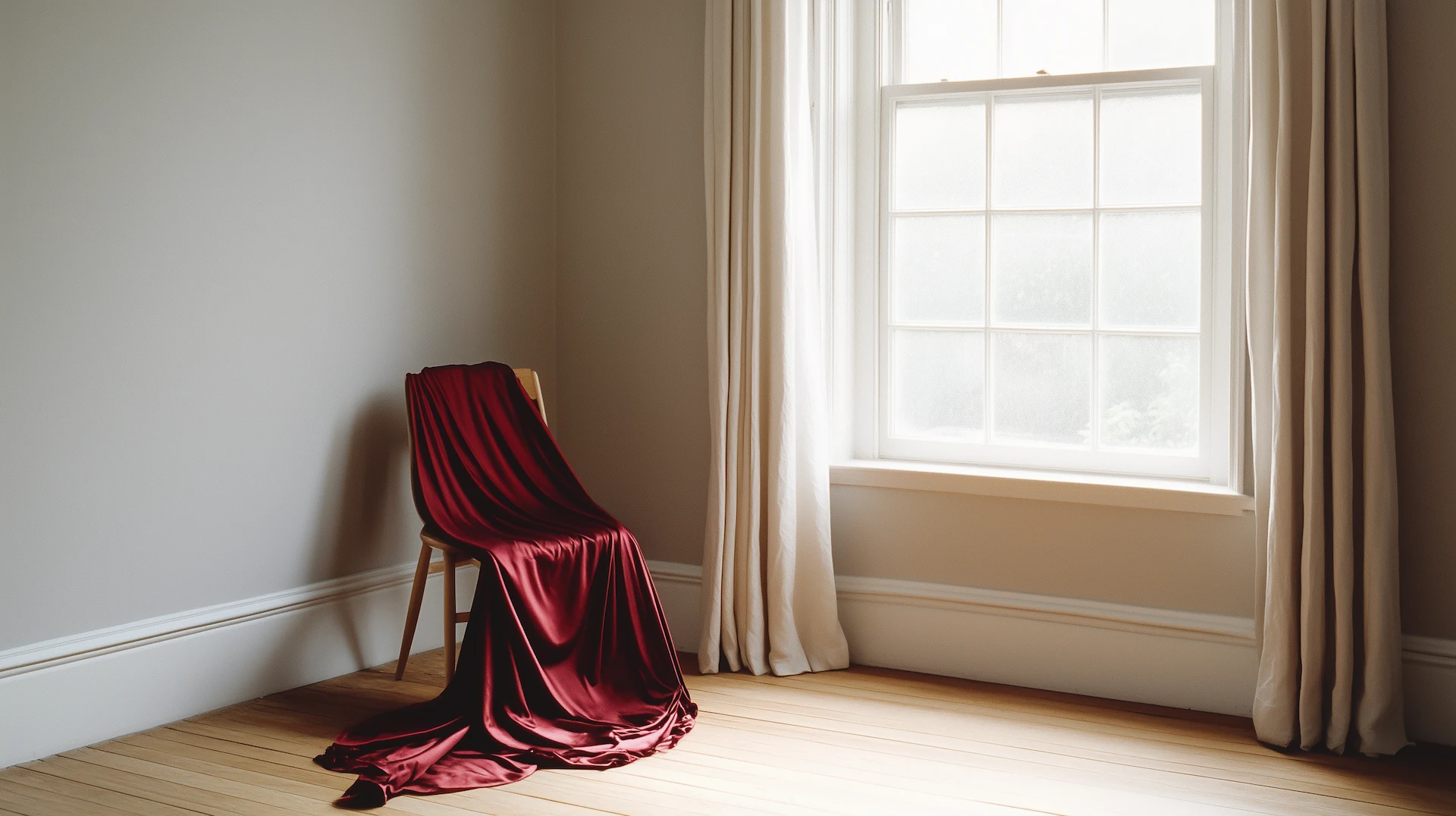
Someone told you no. Probably before you were old enough to argue.
Maybe it was direct: that color is too loud, too bright, too much for someone like you. Maybe it was softer, more charitable: that’s a bold choice, are you sure? Maybe it came without words at all, just a look across a dressing room or a living room or a paint-chip aisle that said, clearly, put it back.
You probably put it back.
This is how color prohibition works. Not through formal decree, but through accumulated discouragement so steady and so early that most of us stop noticing it’s happening. We absorb the rules before we can evaluate them. And by the time we’re old enough to question what we were told, the prohibition has become preference. We genuinely believe we don’t like the color we were trained to avoid.
That is not a small thing. That is a life partially unlived in a shade that belonged to you.
Where the Rules Come From
Color prohibitions are not random. They are social architecture, and they have been built and maintained with purpose.
Some of the oldest color rules are about legibility, which is a polite word for control. Sumptuary laws across Europe and Asia spent centuries regulating who could wear which colors based on class, rank, and station. Purple was imperial. Gold was aristocratic. Bright red in some periods was reserved for those with the wealth to source and maintain it. The point was never aesthetics. The point was that color communicated power, and power had to be kept visible and organized. If anyone could wear purple, how would you know who was in charge?
We no longer have sumptuary laws. We have something more efficient: internalized ones.
The prohibitions that were once enforced by royal decree are now enforced by the people around us, who have, in turn, absorbed them from the people around them. Your aunt, who told you red was “too loud,” was passing down something she received. Your colleague who said your office wall color was “unprofessional” was translating an inherited code. Your mother, who warned that orange “clashes” with your complexion, was repeating a rule she never chose.
None of this makes the gatekeepers villains. Most of them believed what they said. That’s what makes internalized prohibition so effective: it doesn’t require enforcement because it doesn’t feel like a rule. It feels like taste.
The Particular Cruelty of “Not for Someone Like You”
Of all the variations on color prohibition, this one is the sharpest.
Not for someone like you does something the others don’t. It personalizes the exclusion. It ties the color not to the category of “too much” or “inappropriate” but to something in you specifically that makes the color unavailable. Your complexion. Your size. Your class. Your gender. Your neighborhood. Your family. The unspoken standard you don’t meet.
The damage here is double: you lose the color, and you internalize the reason. You learn not only to avoid certain hues but to believe that those hues have correctly identified something lacking in you. The color becomes a mirror that shows you what you’re not.
This is, in most cases, entirely backwards.
The colors we are told aren’t for us are often the colors most precisely calibrated to who we actually are. The brightness that gets labeled “too much” is, more often than not, a direct reflection of the person being told to contain themselves. The richness we’re warned against usually corresponds to something true about our appetite for life. The color we put back on the rack is frequently the one that would have told the truest story.
The prohibition is not correcting a mismatch. It is suppressing a match.
What Happens to a Person Who Stops Listening
There is a particular quality to a room designed by someone who has reclaimed a forbidden color. You can feel it even before you understand it.
It’s not that the color is the loudest thing in the space. Often it’s not. What registers is the lack of apology. The room does not explain itself or hedge its choices. It is not arranged as a negotiation between the person who lives there and the imagined judgment of people who don’t. It is arranged around a conviction. And conviction, in a room, is a form of beauty that no palette generator can produce.
The same is true of a person.
The woman who wore beige for twenty years because someone told her she was “too curvy” for pattern, who finally walks into a room in a dress the color of saffron, is not just wearing a color. She is making a statement about which version of herself she has decided to trust. The man who spent a decade nodding at his contractor’s recommendation of “something neutral and broadly appealing” and finally paints his study a color that makes him feel exactly like himself is not decorating. He is arriving.
This is why reclaiming a forbidden color rarely feels trivial, even when the color in question is something as ordinary as cobalt blue, mustard yellow, or forest green. The act is small. The meaning is not.
The Psychology Beneath the Prohibition
There is a reason color gatekeeping persists, and it is not purely about aesthetics.
Psychologists who study color perception have documented for decades that our responses to color are shaped less by the color itself than by the associations, memories, and social meanings we have learned to attach to it. We do not see colors neutrally. We see them through layers of cultural conditioning so deep that they register as preference. The person who says “I just don’t like orange” is telling the truth as they experience it. They have simply forgotten, or never known, how they came to not like orange.
What this means, practically, is that color prohibition is a form of identity management. To control which colors a person will wear or live with is to influence how they present themselves to the world, which is to influence how they understand themselves. The colors we choose are data. They tell us, and everyone else, something about what we believe we deserve.
And here is the uncomfortable corollary: the colors we refuse are also data.
The persistent avoidance of a color, especially one we once loved, is worth examining. Not because every beige wall is a suppressed desire, but because sometimes it is. Sometimes the safe choice is safe not because it is correct but because it is pre-approved. And a life organized entirely around pre-approved choices is a quieter life than the one that was possible.
On Reclamation
To reclaim a color you were told to avoid is not, in the end, an act of defiance. Defiance suggests the prohibitor is still in the room, still worthy of reaction. Reclamation is something different: it is the quiet decision that the prohibitor’s opinion is no longer the relevant one.
It happens in different ways for different people. For some, it is sudden: the day you walk past a dress or a paint chip and think, that one, that is mine, I have always known it was mine. For others, it is incremental: a pillow first, then a chair, then a wall, until one day you look around a room that is fully, unapologetically yours and realize that you have, over time, quietly taken back what you were given away.
Either way, what you get back is not just the color.
You get back the part of yourself that knew, before anyone corrected you, exactly what you were drawn to and why. You get back the version of your taste that existed before the prohibitions calcified into something you mistook for your own.
That is worth a coat of paint. It is worth a dress in the wrong shade. It is worth every appraising look from every person in the room who thought they understood your palette better than you do.
The colors we were forbidden are the ones worth returning to. Not to make a statement. But because, in most cases, they were never actually forbidden.
They were just waiting for us to stop believing they were.
If this piece made you slow down and think, the newsletter was made for you. Weekly, free, and written for the reader who reads all the way to the end. One letter. One idea. The color of the week, the room worth studying, the question worth sitting with.
Subscribe Free