
There is a table in almost every home I have ever been in. Sometimes it is set. More often it is covered in mail, a laptop, a jacket that belongs somewhere else, the evidence of a life being lived in motion. But the table is there. The chairs are there. The kitchen is behind a wall that is thirty seconds away. And the people who would fill those chairs are out there somewhere, waiting for an invitation that keeps not coming.
Most people are waiting to host. Waiting for the renovation to finish, for the furniture to be replaced, for the room to look the way they’ve been picturing it. They have a version of their home in their mind, a specific future version, and they have decided that version is the one worthy of guests. Until then, the table stays covered. The chairs stay empty.
I understand this impulse. I have felt it myself. There is something in us that wants to show up for the people we love at our best, and we have conflated “our best” with “our most finished.” The instinct is not wrong. The math is.
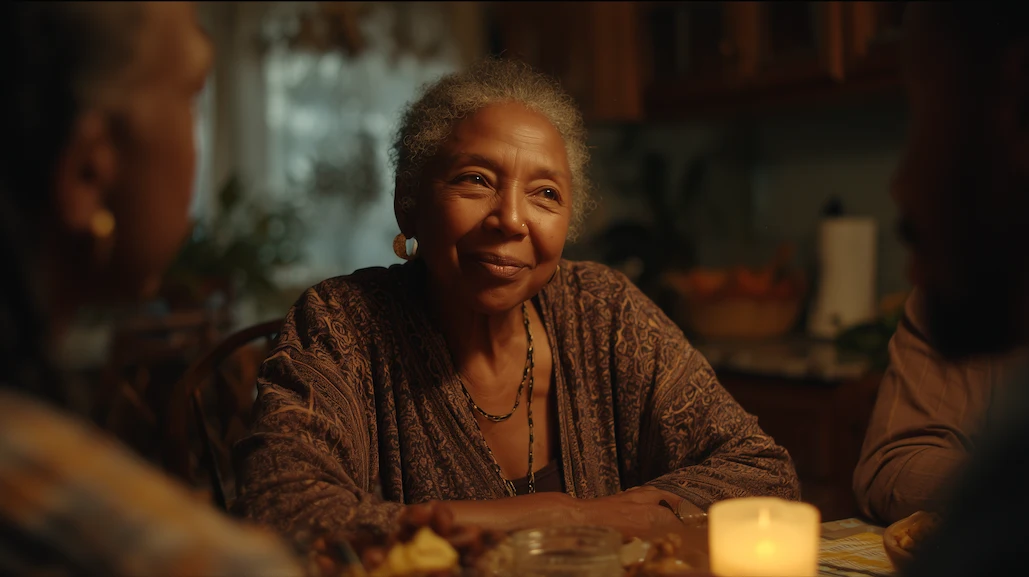
Gathering has never been about the house. It has always been about what happens when you bring people together with deliberate care. The best meals I have been fed were not served in the most considered rooms. They were served by people who decided the people at the table mattered more than the table itself, and then acted on that decision. A mismatched set of glasses. A candle burned down to a stub. A kitchen where the paint was two years past its last conversation. None of it interfered with what actually happened at that table.
What interferes is the waiting.
Some conversations belong in a letter.
Hue & Human — weekly, free, written for the reader who goes further.
Here is what the waiting costs, and it is worth saying plainly. Every season you don’t gather, the habit of gathering weakens. Hosting is a muscle and it atrophies like any other. The people who host well do so because they have done it often enough that the imperfection of the space has stopped mattering to them. They know, from experience, that no one came for the curtains. But you cannot learn that from the outside. You learn it by setting the table, calling the people, and letting the evening prove it to you.
There is a harder version of this I want to name, because not all waiting is perfectionism. Some of it is grief. The home that doesn’t feel finished yet because the vision of it is specific and real, because you have been working toward something and you’re not there, because having people over in the in-between feels like showing your work before it’s done and you are tired of showing unfinished work. That kind of waiting is not laziness. It is a kind of tenderness for a thing you have not yet been able to make.
I am not dismissing that. I am asking whether the people who love you are the ones who most need to see the finished version. They already know you. They have seen your unfinished drafts before, in every form that phrase can take. What they haven’t had is a Tuesday evening in your kitchen with the lights low and something good on the stove. That is what they’re missing. Not the room.
Hosting before the house is ready is not a concession. It is a decision about what the house is actually for. A home that can only be shown once it’s perfect is a home being preserved rather than lived in. And a preserved life, however beautiful in theory, has the same problem as a preserved room: it is waiting for something that may not come before it’s too late to matter.
Set the table. Light what you have. Call the people.
The house will keep becoming. The evening will not wait.
If this piece made you slow down and think, the newsletter was made for you. Weekly, free, and written for the reader who reads all the way to the end. One letter. One idea. The color of the week, the room worth studying, the question worth sitting with.
Subscribe Free