
There is a photograph of my grandfather somewhere in my mother’s house. He is standing outside after church, in a suit the color of slate, a pocket square the color of cream, a hat set just so. He is not smiling. He does not need to. The suit is saying everything.
I did not understand then that I was being taught something. I thought I was just looking at a man. It took me years to understand I was looking at a philosophy.
In Memphis, getting dressed was not casual. It was not the pre-coffee decision you made by reaching for whatever was nearest in the dark. Getting dressed was deliberate. It was considered. It was, in a way that nobody in my family would have used this word, curatorial. You chose what you wore because you understood that color and cloth were a language, and that showing up in that language, fully and without apology, was a form of dignity.
I absorbed this before I had words for it. I absorbed it in the way you absorb the things that surround you in childhood, without knowing you are learning, without knowing the lesson will shape everything that follows.
What I absorbed: you dress for the life you intend to live, not the life currently available to you.
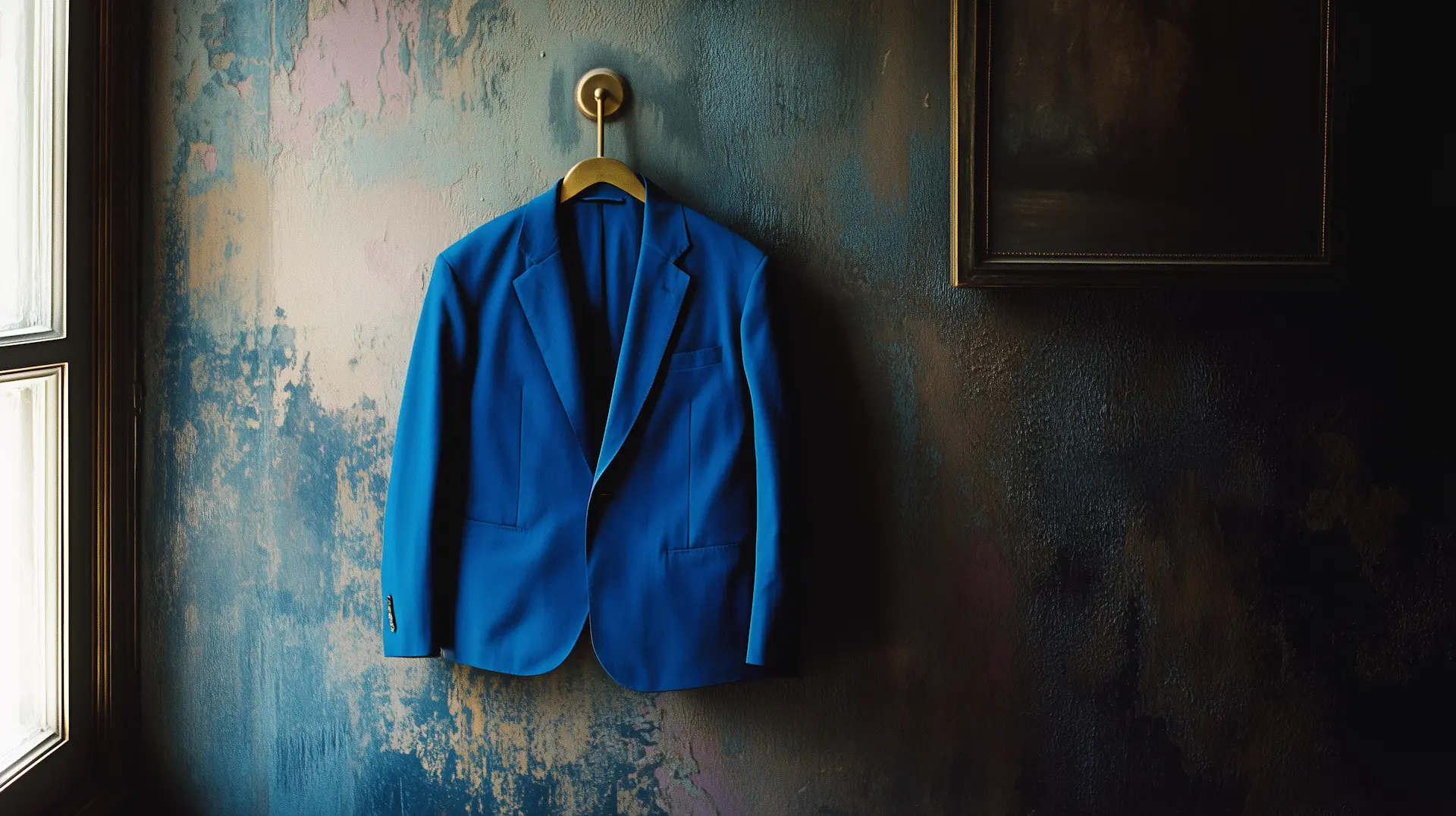
I have worn color my whole life. Not because I am fearless. Because I understood early, in a way I couldn’t have explained at seven or twelve or twenty, that a man in a gray suit is telling you something and a man in a cobalt suit is telling you something else. The gray says: I am reliable. I will not surprise you. The cobalt says: I know what I want. And I want you to know I know.
I wanted people to know I knew.
This is what color confidence actually is, I think. Not the absence of self-consciousness. Not some immunity to the raised eyebrow, the second glance. It is the decision that what the color says about you is more important than the discomfort of being seen saying it. It is choosing the cobalt anyway, because the alternative is choosing the gray, and the gray is a small lie.
I have always preferred honesty in hue.
The thing I did not recognize for a long time is that this was the same instinct I brought into rooms.
Every apartment I lived in, I transformed. Not renovated, not necessarily. I could not always afford paint or new furniture or the things that cost money. But I would move what I had. I would add one thing, the right thing, something in a color that shifted the entire emotional frequency of the space. A lamp. A throw. A bowl. I was dressing the room the way I dressed myself, which is to say: I was telling it what kind of life was going to happen here.
I was staging not for a photograph, but for myself. I was building the environment that would pull me forward. I did not have a name for this then. I do now. I was dressing for the room I wanted, not the room I was in.
The argument I want to make is this: color confidence in clothing and color confidence in spaces come from the same place. Not from taste, exactly. Not from knowing the rules, the wheel, the vocabulary of undertones and saturation. Those things are useful. But they are the tools, not the source.
The source is the belief that you are worth expressing.
This is what I mean when I say color is courage made visible. Not the kind of courage that requires something large and dramatic. The daily kind. The kind that reaches for the cobalt instead of the gray. The kind that hangs something on the wall that is entirely, unapologetically you, knowing that anyone who walks into that room will see it and will understand, without a single word being spoken, who lives here.
My grandfather knew this. He was a man who had every reason to go unseen in the America he navigated, and he dressed, every single Sunday, like a man who refused. The suit was not vanity. It was a declaration. The pocket square was not accessory. It was punctuation.
He was finishing his sentences.
I think about this when I stand in front of my closet in the morning, which is also when I am most honest with myself. The closet is the first decision of the day. It is low-stakes by every external measure. It is, by every internal measure, a rehearsal. How am I going to live today? What am I willing to say out loud about who I am right now, in this season, at this particular age with this particular understanding of myself?
Sometimes I choose the gray. I will not pretend I do not. Some days require camouflage, not declaration. Some days the body knows it needs to be quiet, and the clothes comply.
But on the days I reach for color, something settles. It is the same thing that settles when a room is right. When the walls are the hue they were always supposed to be, when the light hits something in a corner that you chose with intention. A rightness, quiet but total.
The room and the body are asking the same question. Both of them want to know: what do you believe about yourself today?
Color is how you answer.
I started this brand with rooms in mind. With walls and paint and the philosophy of a well-designed space. But I understood from the beginning that the philosophy was bigger than that. That the person who figures out how to live in color does not stop at the front door.
They carry it. In what they wear, in what they choose, in how they move through a world that will very often prefer them smaller, quieter, less.
My grandfather did not go small. He showed up every Sunday in a suit that said: I am here. I have considered this. I am worth the consideration.
That is the whole argument. Everything else is decoration.
The morning you stop reaching for the safe thing and reach for the thing that is actually yours. The first time a room feels like a true sentence, not a draft. The specific quality of confidence that is not loudness but is also not silence. The way getting dressed and designing a space are, at the root, the same act of authorship.
What color have you been putting off?
If this piece made you slow down and think, the newsletter was made for you. Weekly, free, and written for the reader who reads all the way to the end. One letter. One idea. The color of the week, the room worth studying, the question worth sitting with.
Subscribe Free