
For most of my adult life, I kept one room ready.
Not for myself. For the version of my space I wanted someone else to see.
It was always the front-facing room. The one visible from the door. The one I cleaned first when I got the “be there in ten” text. The surfaces were clear. The throw was folded at a precise angle. The candle was lit, not because I wanted candlelight, but because it implied I was the kind of person who burned candles in the afternoon. That room was my best argument. My audition. It said: I am together. I am intentional. I am someone worth visiting.
The bedroom told the truth. I let the bedroom tell the truth.
But the living room, the dining room, the entry table where things pile up and get sorted only when company is coming, those spaces were not mine. They belonged to whoever might walk through the door. And for years, I designed around that ghost.
I am not the only one. I know I am not the only one.
You can see it in the formal living rooms that nobody sits in. The china that comes out twice a year, wrapped in tissue the rest of the time, as if beauty requires a special occasion to justify it. The guest bedroom that receives fresh flowers and a reading lamp and a coordinated set of towels, while the actual bedroom, the room where you close the day and open the next one, gets whatever was left over. The colors that are safe because you couldn’t explain a bold choice to someone who questioned it. The furniture is arranged for the sight line from the front door rather than for the way you actually move through your mornings.
We decorate for the possibility of judgment. We stage our lives in case someone is watching.
The guest becomes the audience. The home becomes the performance. And somewhere in there, the person who actually lives in the space stops being the intended recipient of any of it.
I realized this, slowly and then all at once, the year I bought a chair nobody could see.
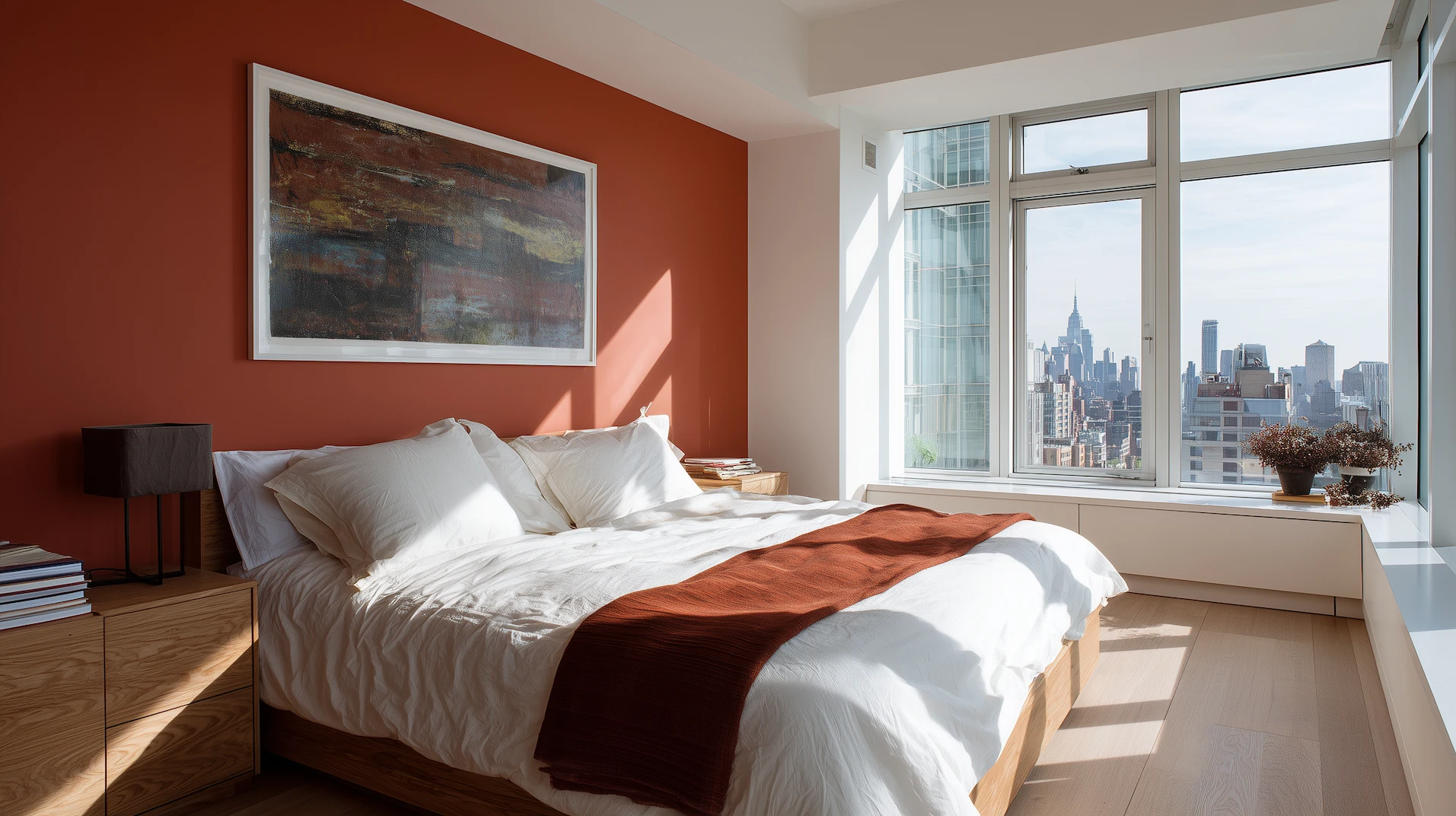
It was a deep coral, almost orange, the kind of color that doesn’t negotiate. I put it in the corner of my bedroom where I read at night. It faced a lamp. It faced a small stack of books. It faced the window, which looked out at nothing in particular. No one who came to my apartment would see that chair unless I walked them through the bedroom, which I didn’t. It was mine in a way none of the other furniture was. I bought it for the specific quality of its light at ten o’clock at night. I bought it for what it felt like to sit in it.
I had not asked myself what anything else in the apartment felt like from the inside. I had only asked what it looked like from the door.
That is the design habit nobody talks about, and it runs deeper than furniture arrangement. It lives in the colors we avoid because we cannot defend them to someone who might ask. It lives in the choices we make small, because we don’t want to explain ourselves. It lives in the room we keep empty because it’s easier to say “guest bedroom” than to admit we want a studio, a library, a space that serves our actual life. The guest is a useful fiction. The guest absolves us of having to want things for ourselves.
There is a particular species of cowardice in designing for an audience instead of for a life. I say cowardice gently, because I spent years inside it. It is not vanity, exactly. It is closer to a preemptive apology, the conviction that our preferences need external validation before they earn the right to take up space. The coral chair asked nothing of anyone. It just asked me what I actually wanted, and I had to answer.
Color is where this becomes most visible, which is why it is the lens I keep returning to.
The colors we choose in the front-facing rooms of our lives tell one story. The colors we would choose if we stopped performing tell another. Most of us live in the gap between those two stories, and we call it good taste. We call it restraint. We call it not wanting to be too much.
What it actually is: designing for whoever might visit rather than for the person who lives there.
The year I stopped doing that did not begin with a dramatic decision. It began with the coral chair, which led to a paint color in the hallway, which led to a tablecloth no one but me would ever eat from, which led to the slow and disorienting pleasure of arranging my space for my actual mornings. Not for the morning someone might arrive and find me. For the morning I would actually have.
What I found, on the other side of that rearrangement, was not a room that impressed anyone. It was a room that felt inhabited. There is a difference, and it is not subtle. A room designed for company is always slightly held back. A room designed for the person who lives there has a quality of commitment to it, a willingness to say: this is what I wanted, and I wanted it enough to do it.
The guest bedroom still exists. I am not suggesting anyone cancel hospitality. But I did move the good towels into my own bathroom. I put the china on the table on a regular Wednesday. I bought a second coral chair, because one wasn’t enough, and arranged them both to face each other and the window, and absolutely nothing else of consequence.
Nobody who came to dinner commented on the chairs.
But I sat in them every morning for a year, and every morning they said the same thing back to me. They said: you are allowed to live here.
That is the argument your space should be making. Not to whoever might visit. To you.
What room have you been designing for the guest?
If this piece made you slow down and think, the newsletter was made for you. Weekly, free, and written for the reader who reads all the way to the end. One letter. One idea. The color of the week, the room worth studying, the question worth sitting with.
Subscribe Free