
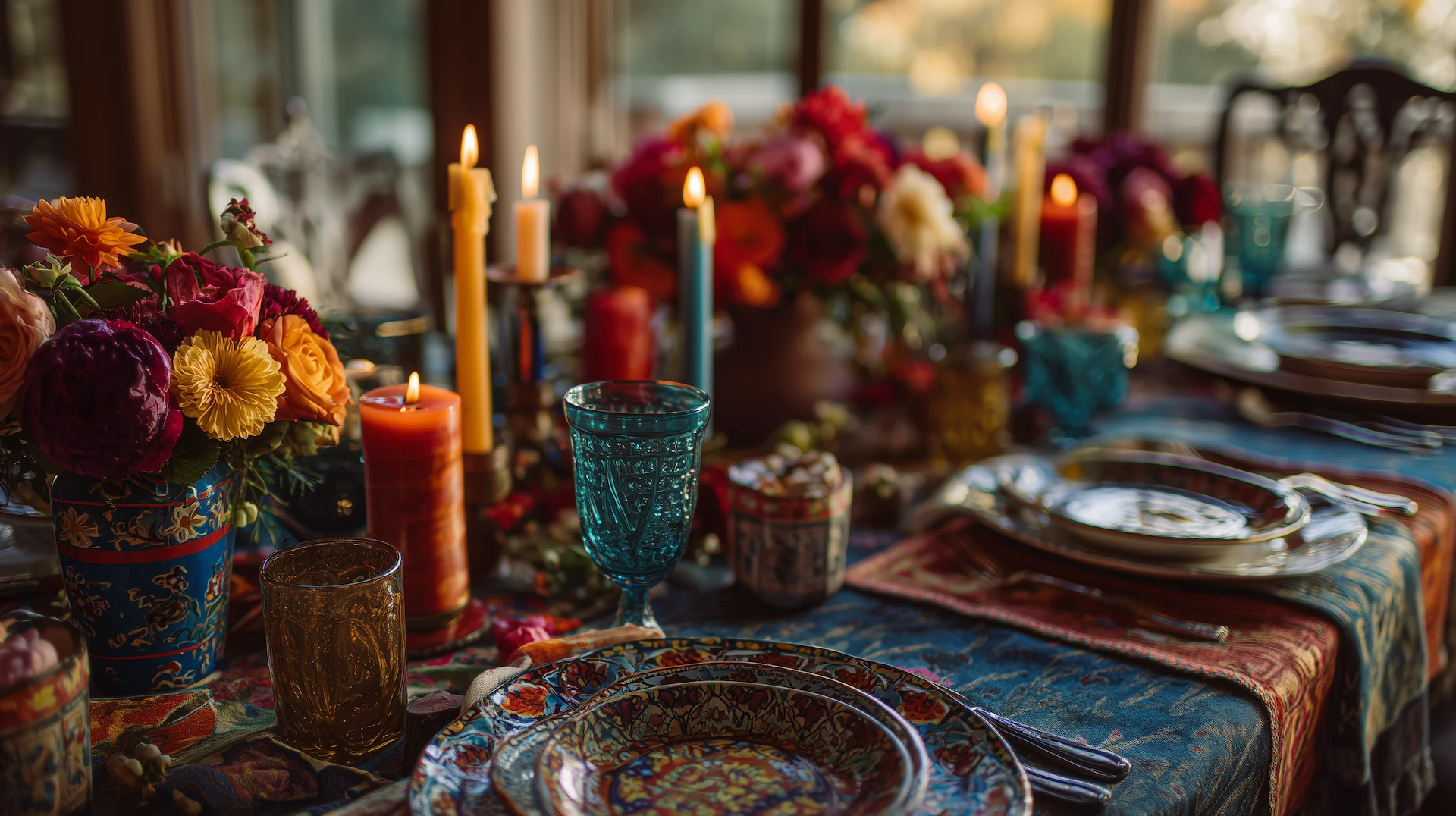
There is a particular kind of message that cannot be sent in words. You cannot text it, cannot say it directly without it coming out wrong, cannot write it in a card without it sounding like something you found on a card. It requires, instead, a set of choices made in advance of someone’s arrival. A color. A dish. A stem of something placed just so. By the time your guest walks through the door, the message has already been delivered.
The table you set is a love letter written in objects.
My grandmother never would have called it that. She would have called it Sunday dinner. She would have called it getting ready for the family. But what she was doing, every single week without exception, was making an argument for the people who were coming to eat. That argument looked like the good dishes brought out from behind the cabinet where they lived the rest of the week. It looked like flowers from the yard, or from the store if the yard wasn’t cooperating. It looked like color: the tablecloth that wasn’t the beige one, the napkins that matched something nobody was entirely sure they were supposed to match. There was intention in every inch of that table, and you felt it the moment you sat down, even as a child, even before you had language for what you were feeling.
What you were feeling was: I was expected. I was prepared for. Someone did this for me.
That is not a small thing. That is, in fact, the whole thing.
We have largely forgotten what a table is for. We use it for eating, which is true but incomplete. A table is a stage for a specific kind of claim: the claim that the people gathering around it are worth the effort. Worth the pressed napkins and the candles and the bowl of something beautiful in the center that nobody is quite sure how to serve. Worth the extra twenty minutes it took to do this right instead of just doing it.
The tragedy of the casual table is not aesthetic. It is philosophical. When we eat off whatever is clean, when the table holds the mail and the chargers and the three things we mean to put away, when dinner is assembled rather than set, we are not just being practical. We are making a statement. We are saying: this meal does not warrant ceremony. And by extension, without meaning to, without malice: neither do you.
A table set with intention says the opposite. It says: I thought about this before you arrived. I considered what color would feel right tonight. I made a choice about the light. I wanted this to feel like something.
That is generosity. Not the financial kind, though beautiful things cost money and nobody should pretend they don’t. The deeper kind. The kind that costs time and attention and the willingness to take the meal seriously as an event, not just a function.
Color is where the generosity becomes visible.
The table that stays neutral, that keeps everything in a careful, coordinated beige, is not a safe choice. It is a quiet decision to say nothing. There is nothing wrong with cream and white and the warm pale tones of good linen. But a table that introduces color, that commits to something, is a table that has made an argument. Look. I chose this. I thought you were worth choosing it for.
In my grandmother’s house, color was not an accident. It was an assertion. The tablecloth was not whatever was on top of the pile. The flowers were not an afterthought. Color was the signal that this was a special occasion, or that an ordinary Sunday had been elevated into one, which is the better trick. The riot of color at those family gatherings, the loud, warm, overlapping presence of it, was not decoration. It was declaration: we are gathered. We are here. We are alive and we are celebrating that, even if what we are celebrating is just a Tuesday.
I have been chasing that feeling ever since.
Some conversations belong in a letter.
Hue & Human — weekly, free, written for the reader who goes further.
There is a specific courage required to set a colorful table. It is the same courage that hangs the orange curtains, that chooses the house with the red door, that wears the thing that might be too much. The courage of deciding that boldness is worth the risk of being wrong.
Because you can be wrong about a table. You can choose a color that fights with the light, that makes the food look strange, that your guests clock immediately and say nothing about. The table, like all acts of self-expression, is vulnerable. You have committed to something in advance, for people who have not yet arrived, based on a belief about what they deserve. That belief is exposed. It can be seen.
Set it anyway. Choose the cloth that says something. Put the flowers in the color that makes you feel something. Use the good dishes, the ones behind the cabinet, the ones you are saving for when it matters. This matters. The people coming to your table matter. The evening matters.
And if you are worried that it is too much, that you are trying too hard, that the candles and the color and the intention will feel performative to people who just wanted dinner, consider this: nobody has ever sat down at a table and thought, I wish they had done less for me. Nobody has ever felt over-welcomed.
My grandmother set her table every Sunday. Not for company, not for holidays, not for the occasions that would have given permission. She set it for the family, which she treated as the same thing. The family was the occasion. The gathering was the event. The riot of color and effort and those good dishes were not saved for something better, because she had decided, without ever saying so, that there was nothing better than this.
I think about that now when I am setting my own table. When I am choosing between the tablecloth that is fine and the one that says something. When I am deciding whether the flowers are too much or just right. When I am asking myself if this amount of effort, for this number of people, on this particular Tuesday, is warranted.
It is always warranted. The people coming to your table are always worth the good dishes.
Set the table in full color. Make the argument out loud. Let them walk in and feel, before a word is said, that someone prepared for them. That they were expected. That they are worth the effort.
Because they are. And a table set with intention is one of the few ways we have to say so before words get in the way.
What color have you been putting off at your table?
If this piece made you slow down and think, the newsletter was made for you. Weekly, free, and written for the reader who reads all the way to the end. One letter. One idea. The color of the week, the room worth studying, the question worth sitting with.
Subscribe Free